1. What is Vedanta?
Vedanta is a classical school of Indian philosophy based on the teachings of the Vedas, the sacred Indian scriptures that provide eternal knowledge and are composed in Sanskrit.
Non-dual (Advaita) Vedanta is a means of knowledge for the true nature of oneself, which is covered by the false ideas the individual has about himself and the world. Once the misconception is removed, one sees the oneness behind every perception in this world and starts living in peace with himself.
Advaita Vedanta is neither a religion nor a system of mere logical reasoning. Still, it is not opposed to religion and at the same time it uses logic that follows the ideas presented in the texts that are studied.
2. How this knowledge has come to us
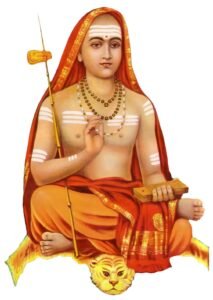
The Vedas were revealed in the minds of the Rishis (wise man and women) at the beginning of time. Since that time the teachings of the Vedas in the form of Advaita Vedanta has been uninterruptedly transferred from teacher to student. The most important teacher of Advaita Vedanta in the relatively recent times is Adi Shankara, whose teachings have been intactly preserved in written form by his students and are nowadays translated and printed in books. His commentaries on the sacred texts written in Sanskrit are still being studied and taught in the tradition established by his students in India while his language is characterized as “prasanna-gambhira” – lucid and profound.
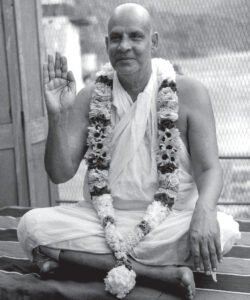
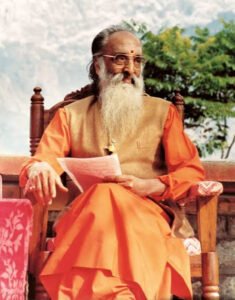
This knowledge has reached nonSankrit-speaking people in the Western countries when great revolutionary teachers of the previous century such as Swami Shivananda and Swami Cinmayananda decided to teach foreigners in English, which previously was not the case.
3. Texts studied
Upanishad
The part of the Vedas that is of interest to Advaita Vedanta are the so-called Upanishads, which are typically located in the Aranyaka section that is at the end of each of the 4 Vedas. While the first part of the Vedas deals with rituals and means for achieving various transitory ends, the latter part reveals the truth of oneself. The Upanishads contain the essence of Vedic teachings and are the foundation on which most of the later philosophies and religions of India are based.
Adi Shankara has written commentaries for 10 Upanishads out of the 108 that are traditionally recognized as such. The 10 Upanishads are: Aitareya, Brhadaranyaka, Chandogya, Isha, Katha, Kena, Mandukya, Mundaka, Prashna and Taittiriya.
Brahma Sutra
The Brahma sutra, also known as Sariraka Mimamsa, is composed by the sage Veda Vyasa and it consists of 555 aphorisms, presenting the entire teaching of the Upanishads in a condensed form. The first 4 sutras are collectively called as Catuhsutri and they contain the entire essence of the Brahma Sutra. Adi Shankara’s commentary of Brahma Sutra is traditionally studied along with these aphorisms at an advanced study level.
Bhagavadgita
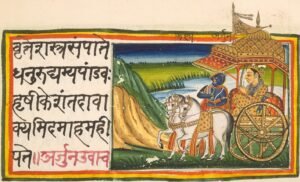
The Bhagavad Gita is a small part of the great Indian Mahabharata epic. It conveys the Upanishadic teaching in the form of conversation that answers eternal questions of humanity about the purpose of life, the relation of the individual with the total, attitude towards life’s hardships and right conduct.
The three texts Upanishads, Brahmasutra and Bhagavadgita are collectively called as “Prasthana-traya” and the commentaries written by Adi Shankara are considered the foundation of Advaita Vedanta.
Prakarana Grantha
While the Upanishad, Brahma Sutra and Bhagavad Gita impart revealed knowledge, great teachers of the tradition have themselves written texts that methodically explain the terms and teachings of the scriptures. These texts are called Prakarana Granthas and they typically focus on specific topics the teacher wishes to explain usually at an introductory level. Adi Shankara himself is considered to have written a few, while another renowned teacher of the tradition is Swami Vidyaranya.
Examples of Prakarana Granthas are the following: Tattva-Bodha, Vivekachudamani, Atma-Bodha, Panchadashi, Drk-drshya Viveka, Upadesha-Sahasri, Aparokshanubhuti, Dasha-Shloki, Shata-Shloki, Vakya-Vritti and Panchikarana
4. Who is eligible for this path?
Literally everyone with a mind capable of thinking reasonably is eligible for this study. Everyone struggles in his life to a smaller or larger degree with different flavors of the same issues that seem insolvable. Everyone feels the same limitation, has likes and dislikes ruling his thoughts and acts that eventually shape his reality and consciously or unconsciously tries to remove them in order to feel fulfilled and happy.
As long as there are people seeking answers and wanting to be free, the teaching of Advaita Vedanta remains relevant.
5. Steps for Vedanta study
The first and most important step is listening to the teaching brought by a competent teacher who has himself been taught in the tradition and is able to unfold the meaning of the texts. Self-reflection is the second step, during which the student clears the doubts in his mind. The third step involves meditation for the assimilation of the knowledge.
If one wishes to dive deep into the philosophy and benefit from it to the maximum degree, the opportunity is given to study the Sanskrit language. The student becomes eventually independent from translations that inevitably cannot express the meaning with the necessary precision this study demands in order to fructify. Once equipped with the necessary tools by his teacher, the student can continue this study independently. Great benefits and joy come as a result of this effort.
6. Importance of spiritual practises
As in agriculture one needs to prepare the ground before planting seeds, similarly in the field of knowledge one needs to prepare his mind and keep it calm and cheerful in order to understand and retain what is communicated. For eliminating the agitation or dullness of the mind there are practical means called Sadhana, such as hatha yoga, meditation and breath control exercises that train the mind to become naturally concentrated, calm and receptive. From these practices one can generally have great benefit in one’s everyday life, but when they are specifically employed and regularly applied, they tend to transform the practitioner’s way of thinking. Other traditional types of Sadhana are chanting mantras and performing religious rituals.